
Cross-sectoral collaboration brings greater food safety through market chain interventions: Kemis market in Tangerang district
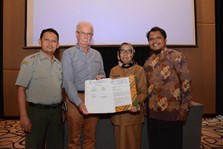
The results of market surveillance and an H5N1 endemicity study showed that markets are a sink of circulating highly pathogenic avian influenza (HPAI) virus with complex problems of poor hygiene, sanitation and market management. Currently, different market policies are implemented by different stakeholders with limited supervision and inconsistent regulations resulting in unresolved health and disease problems. Following discussions and consultation with key market stakeholders, an agreement was reached to implement multi-sectoral market chain interventions involving MoA, MoH and Ministry of Trade (MoT) to prevent and contain zoonoses in markets. Kemis Market in Tangerang district was selected as one of the three pilot markets. Following stakeholder coordination meetings, a Memorandum of Understanding (MoU) was signed and joint activities were identified for implementation at Kemis Market. The joint activities focused on a more comprehensive approach to address market health problems whereby MoA focused on improving biosecurity in the live bird trading section by implementing cleaning and disinfection activities. Meanwhile, the MoH focused on increasing awareness of market traders and consumers on personal hygiene, sanitation and improved health behaviour. The MoT focused on improving market management by monitoring and implementing the Indonesia national standard market certification (SNI 8152:2015), which is aligned with the MoH Decree on healthy markets.
There was high commitment from all key stakeholders to allocate budget to support integrated activities: namely provision of training and advocacy budget on biosecurity and food safety by the Tangerang District Livestock Service and procurement of scales/calibration equipment and price information by the Tangerang Industry and Trade Service. While the MoT provided budget for SNI market certification and the Tangerang Environmental and Hygiene Service provided laboratory testing for coliform, chemical and physical contaminants of market liquid waste. The Health Service conducted laboratory testing of market water sources, Market Managers conducted Market Biosecurity Training for janitors and the Association of Market Traders implemented regular cleaning of the market.
Through cross-sectoral collaboration, more effective interventions are possible to improve market chain food safety with joint commitments, adequate budgets and active participation of all market stakeholders, thus creating clean and safe markets for both consumers and market stakeholders.